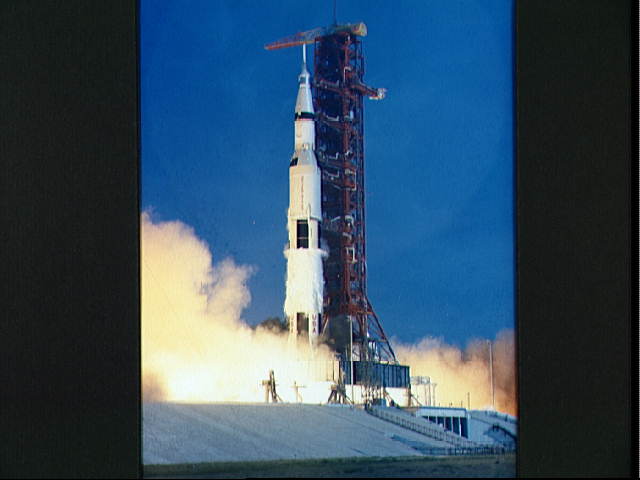
The first human journey to the surface of the Moon began at Pad A, Launch Complex 39, Kennedy Space Center, Florida with the liftoff of Apollo 11 on a Saturn V booster at 9:32 am EDT (13:32 UT) on a clear sunny Wednesday, 16 July 1969. Manusia pertama perjalanan ke permukaan Bulan mulai di Pad A, Kompleks Peluncuran 39, Kennedy Space Center, Florida dengan lepas landas dari Apollo 11 Saturn V pada penguat pada 9:32 EDT (13:32 UT) pada jelas cerah Rabu, Juli 16, 1969.
(NASA photo ID S69-39525) (NASA photo ID S69-39525)
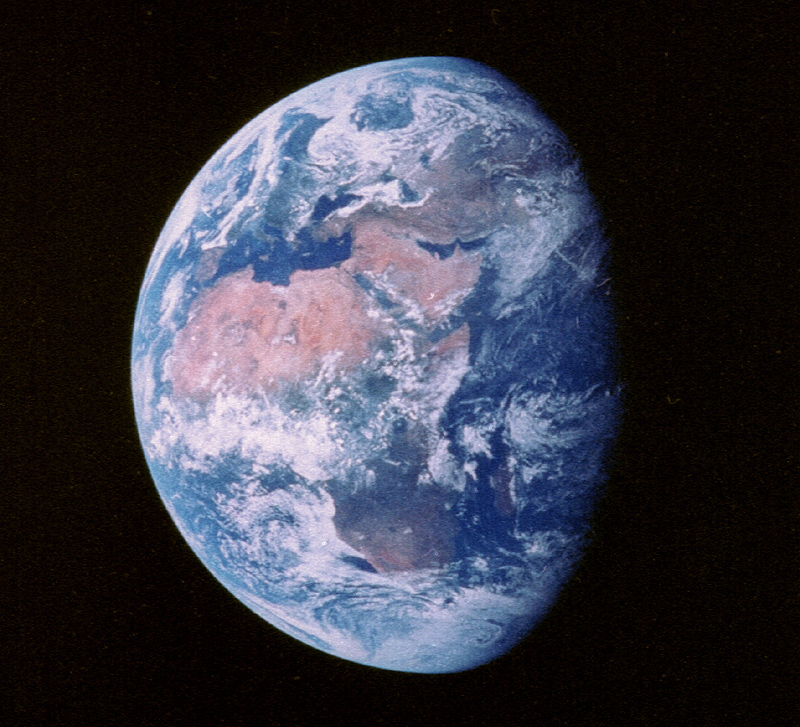
The Apollo spacecraft reached Earth parking orbit after 11 minutes. After one and a half orbits the Saturn thrusters fired and the astronauts began their journey to the Moon. This spectacular photo of the Earth was taken from 158,000 km (98,000 miles) during the Apollo 11 translunar injection on July 16. Angkasa Apollo parkir mencapai orbit Bumi setelah 11 menit. Setelah satu setengah pendorong mengorbit Saturnus dipecat dan para astronot memulai perjalanan ke Bulan. Ini foto spektakuler Bumi diambil dari 158.000 km (98.000 mil) selama Apollo 11 translunar suntikan pada tanggal 16 Juli. Most of Africa and parts of Europe and Asia are visible. Sebagian besar Afrika dan sebagian Eropa dan Asia yang terlihat.
(NASA photo ID AS11-36-5355) (NASA photo ID AS11-36-5355)
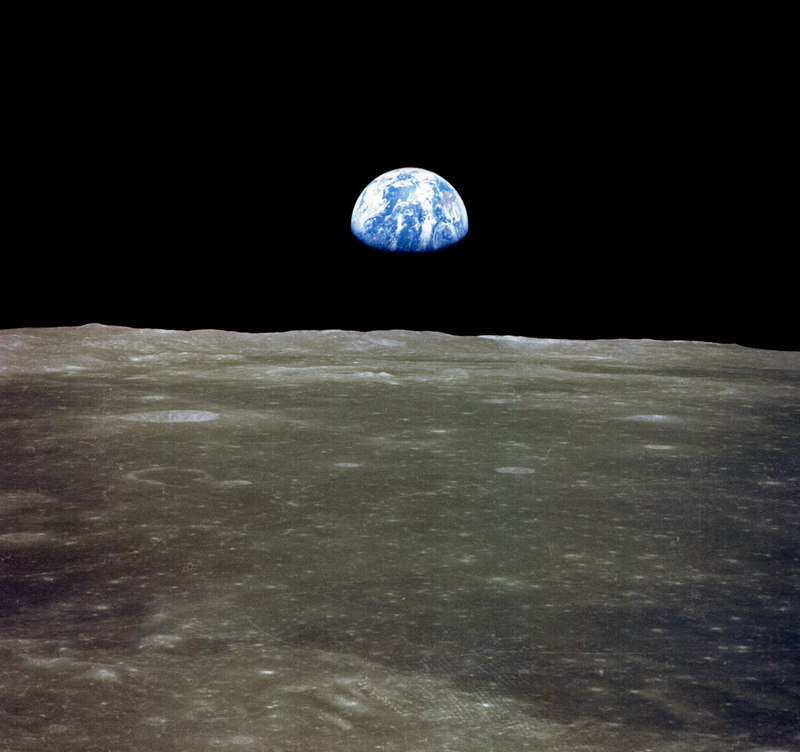
On July 20, 1969, after a four day trip, the Apollo astronauts arrived at the Moon. This photo of Earthrise over the lunar horizon taken from the orbiting Command Module is one of the most famous images returned from the space program, although even the astronauts themselves cannot remember who actually took the picture. Pada tanggal 20 Juli 1969, setelah empat hari perjalanan, astronot Apollo tiba di Bulan. Ini foto Earthrise atas cakrawala bulan diambil dari Modul Komando mengorbit adalah salah satu gambar yang paling terkenal kembali dari program luar angkasa, bahkan meskipun astronot sendiri tidak bisa mengingat siapa yang benar-benar mengambil gambar. The lunar terrain shown, centered at 85 degrees east longitude and 3 degrees north latitude on the nearside of the Moon is in the area of Smyth's Sea. Medan lunar ditampilkan, berpusat pada 85 derajat Bujur Timur dan 3 derajat lintang utara di Bulan nearside adalah di bidang Smyth's Sea.
(NASA photo ID AS11-44-6552) (NASA photo ID AS11-44-6552)
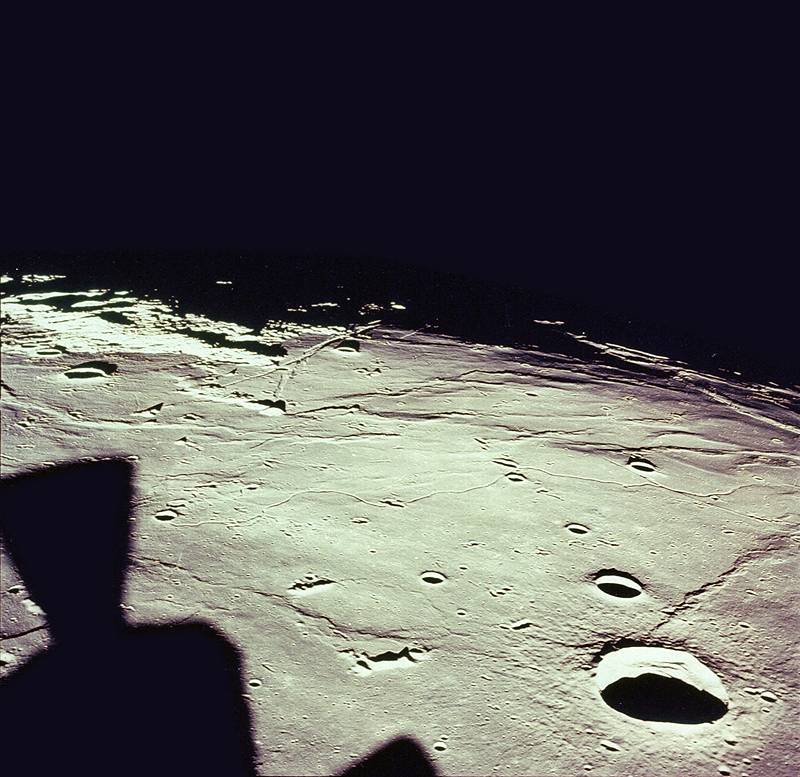
This west-looking image of the landing site in the southwestern Sea of Tranquility was taken from the lunar module one orbit before descent, while still docked to the command module. The Tranquility base site is near the shadow line, just to the right of center. The large crater at the lower right is Maskelyne. Barat ini tampak gambar dari lokasi pendaratan di barat daya Laut Tranquility diambil dari satu modul lunar orbit sebelum keturunan, sementara masih merapat ke modul perintah. Dasar yang Tranquility Situs ini di dekat garis bayangan, tepat di sebelah kanan dari pusat . kawah besar di bagian kanan bawah adalah Maskelyne. The large black object in the lower left is not a shadow but a LM thruster in the camera field of view. Benda hitam besar di bagian kiri bawah bukan bayangan tetapi LM pendorong dalam bidang pandang kamera.
(NASA photo ID AS11-37-5437) (NASA photo ID AS11-37-5437)
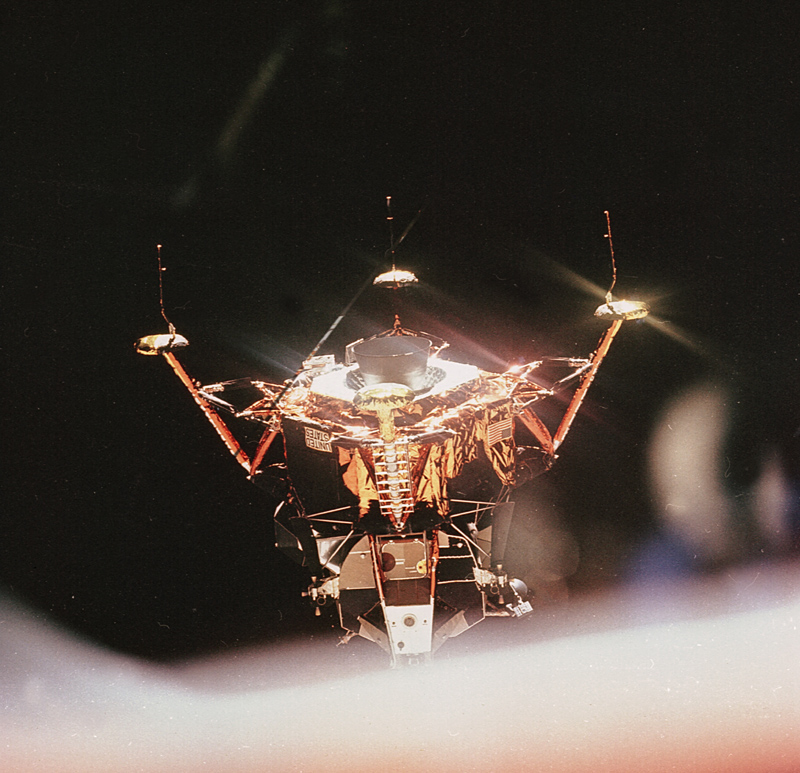
At 1:47 pm EDT, July 20, the Lunar Module "Eagle" carrying Neil Armstrong and Edwin Aldrin, separated from the Command Module "Columbia". At 1:47 EST, Juli 20, Lunar Module "Eagle" membawa Neil Armstrong dan Edwin Aldrin, dipisahkan dari Komando Modul "Columbia". Michael Collins, aboard the Columbia, took this picture of the LM as it prepared for its descent to the Moon. Michael Collins, kapal Columbia, mengambil foto ini LM seperti siap untuk turun ke Bulan. "You cats take it easy on the lunar surface", Collins said as he released the LM. "Kau kucing bawa mudah pada permukaan bulan", Collins sambil melepaskan LM. Collins did a visual inspection of the lunar module and said, "I think you've got a fine looking machine there, Eagle, despite the fact that you're upside-down." Collins melakukan inspeksi visual dari modul lunar dan berkata, "Saya pikir kau punya mesin tampan di sana, Eagle, meskipun fakta bahwa Anda terbalik." "Somebody's upside-down", Armstrong replied. The lunar horizon can be seen in the background. "Ada yang terbalik", Armstrong jawab. Cakrawala yang lunar dapat dilihat di latar belakang.
(NASA photo ID AS11-44-6574) (NASA photo ID AS11-44-6574)
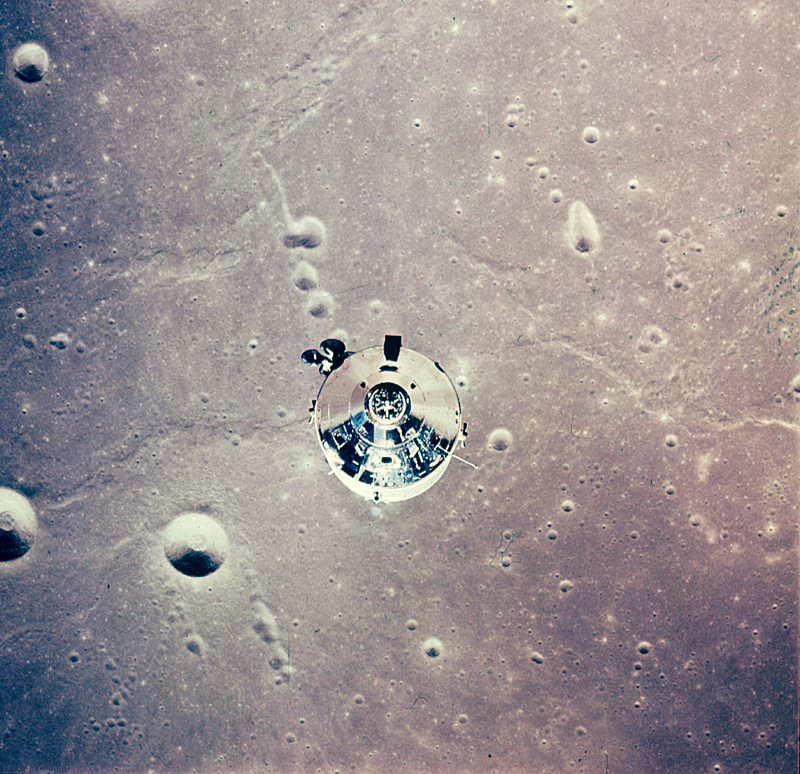
This photograph of the Command Module was taken from the LM after separation. Foto ini Modul Komando diambil dari LM setelah perpisahan. The lunar surface below is in the north central Sea of Fertility, centered at 51 degree east longitude, 1 degree north latitude. Permukaan bulan di bawah ini di bagian utara Laut pusat Fertilitas, berpusat di 51 derajat bujur timur, 1 derajat lintang utara. Over the next day, Michael Collins would orbit the Moon while his colleagues walked on its surface. Selama hari berikutnya, Michael Collins akan mengorbit Bulan, sementara rekan-rekannya berjalan di permukaannya. With no video monitor onboard he could not watch the proceedings but only listen in on the radio communications - and enjoy the sensation of orbiting the Moon solo, the first time anyone had been the only person in lunar orbit. Dengan tidak adanya monitor video onboard, ia tak bisa menyaksikan proses tetapi hanya mendengarkan di radio komunikasi - dan menikmati sensasi yang mengorbit Bulan solo, pertama kali seseorang telah menjadi satu-satunya orang di orbit bulan.
(NASA photo ID AS11-37-5445) (NASA photo ID AS11-37-5445)

"Houston, Tranquility Base here. The Eagle has landed." These words ushered in a new era of human exploration at 4:18 pm EDT on July 20, as the first crewed flight to the Moon touched down after flying longer than planned, down to the last 40 seconds of fuel, to avoid a field of boulders and a large crater. "Houston, Tranquility Base di sini. Elang sudah mendarat." Kata-kata ini diantar di era baru eksplorasi manusia at 4:18 EDT pada 20 Juli, seperti yang pertama crewed penerbangan ke Bulan mendarat setelah terbang lebih lama dari yang direncanakan, turun ke 40 detik terakhir bahan bakar, untuk menghindari bidang batu-batu dan kawah besar. Charles Duke, the Capcom (capsule communicator) back in Houston, replied, "Roger, Tranquility. We copy you on the ground. You got a bunch of guys about to turn blue. We're breathing again." Charles Duke, yang Capcom (kapsul komunikator) kembali di Houston, menjawab, "Roger, Tranquility. Kami salin Anda di tanah. Kau punya sekelompok orang akan membiru. Kami sedang bernapas lagi." This picture, taken from the LM window shortly before touchdown, shows the surface of the Moon near the touchdown point in the Sea of Tranquility. Gambar ini, diambil dari jendela LM lama sebelum touchdown, menunjukkan permukaan Bulan touchdown di dekat titik di Laut Tranquility.
(NASA photo ID AS11-37-5458) (NASA photo ID AS11-37-5458)
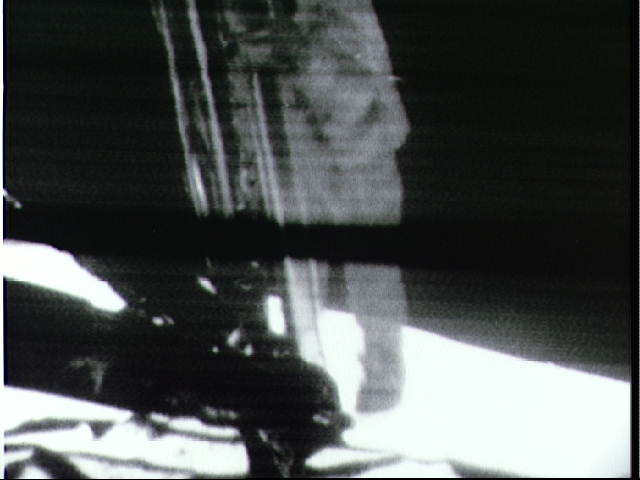
"That's one small step for man, one giant leap for mankind." At 10:56 pm EDT on July 20, 1969, Neil Armstrong became the first human to set foot on the Moon. "Itu salah satu langkah kecil untuk manusia, satu lompatan raksasa bagi umat manusia." Pada 10:56 EDT pada 20 Juli 1969, Neil Armstrong menjadi manusia pertama yang menginjakkan kaki di Bulan. This image was taken from the telecast of the event, watched by over half a billion people around the world. Gambar ini diambil dari acara siaran, disaksikan oleh lebih dari setengah miliar orang di seluruh dunia. Armstrong composed the quote after landing on the Moon, he had meant to say, "That's one small step for a man ...". The pictures were taken by the Apollo lunar surface camera, mounted on one of the LM legs. Armstrong menyusun penawaran setelah mendarat di Bulan, ia bermaksud mengatakan, "Itu salah satu langkah kecil bagi seorang pria ...". Foto-foto itu diambil oleh Apollo permukaan bulan kamera, yang dipasang di salah satu kaki LM. The black bar running through the center of the picture is an anomaly in the Goldstone ground data system. Bar hitam berjalan melalui pusat gambar adalah anomali dalam sistem data tanah Goldstone.
(NASA photo ID S69-42583) (NASA photo ID S69-42583)
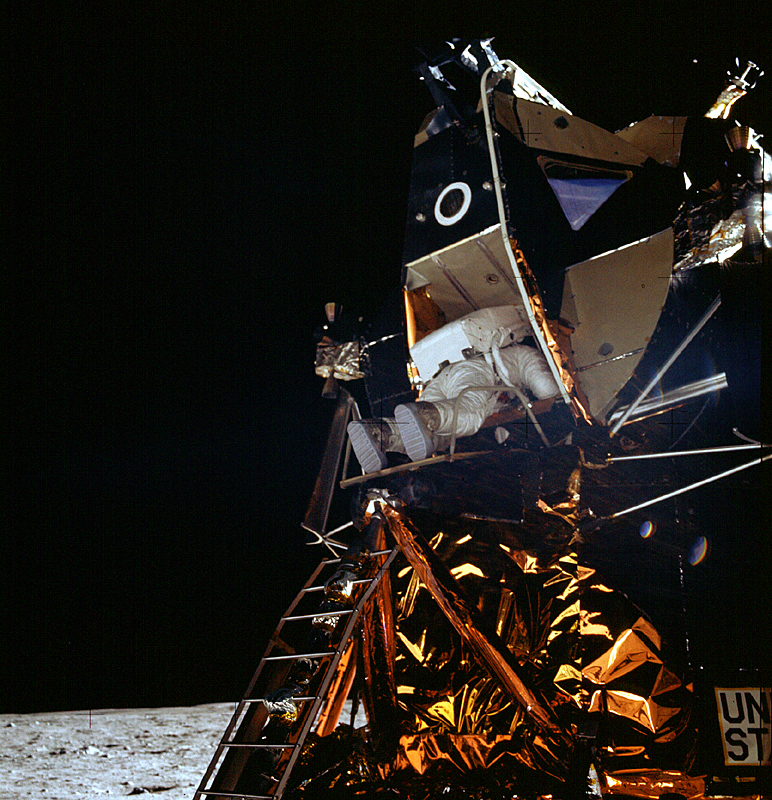
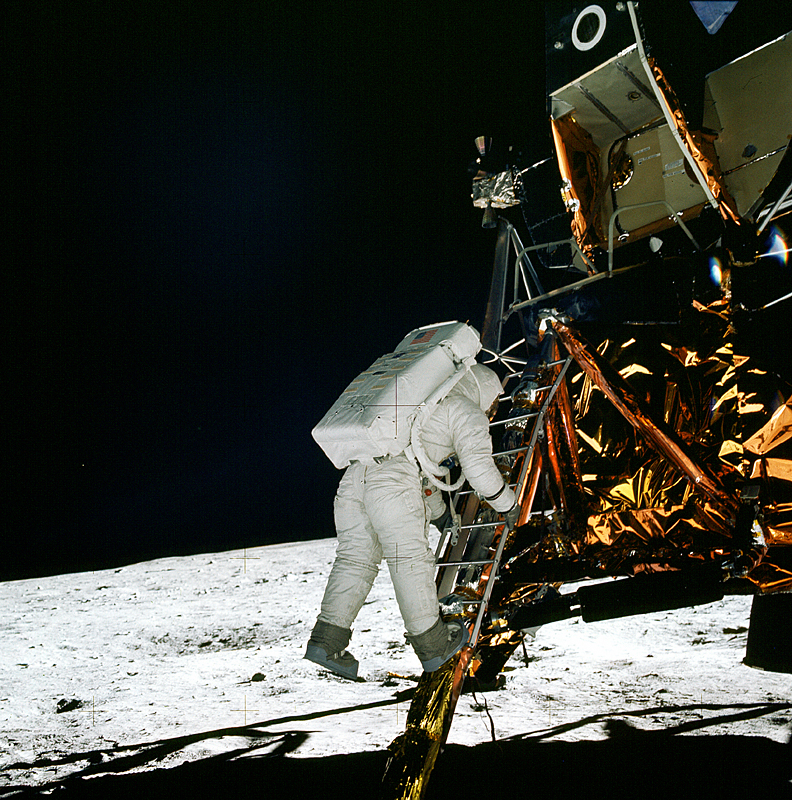
Aldrin joined Armstrong on the surface about nineteen minutes later, calling it "Magnificent desolation". As he left the LM, Aldrin said, "Now I want to back up and partially close the hatch - making sure not to lock it on my way out." "A particularly good thought." Aldrin bergabung Armstrong di permukaan sekitar sembilan belas menit kemudian, menyebutnya "Magnificent kesedihan". Ketika ia meninggalkan LM, Aldrin berkata, "Sekarang saya ingin kembali ke atas dan sebagian menutup palka - tidak memastikan untuk menguncinya di jalan keluar . "" yang terutama pikiran yang baik. " laughed Armstrong. tertawa Armstrong. Asked later on why they bothered closing the hatch, Armstrong said it was to avoid having someone ask "Were you born in a barn?" Bertanya di kemudian hari mengapa mereka repot-repot menutup menetas, Armstrong mengatakan hal itu untuk menghindari seseorang bertanya "Apakah Anda lahir di kandang?"
(NASA photo IDs AS11-40-5863 and AS11-40-5868) (NASA photo ID AS11-40-5863 dan AS11-40-5868)
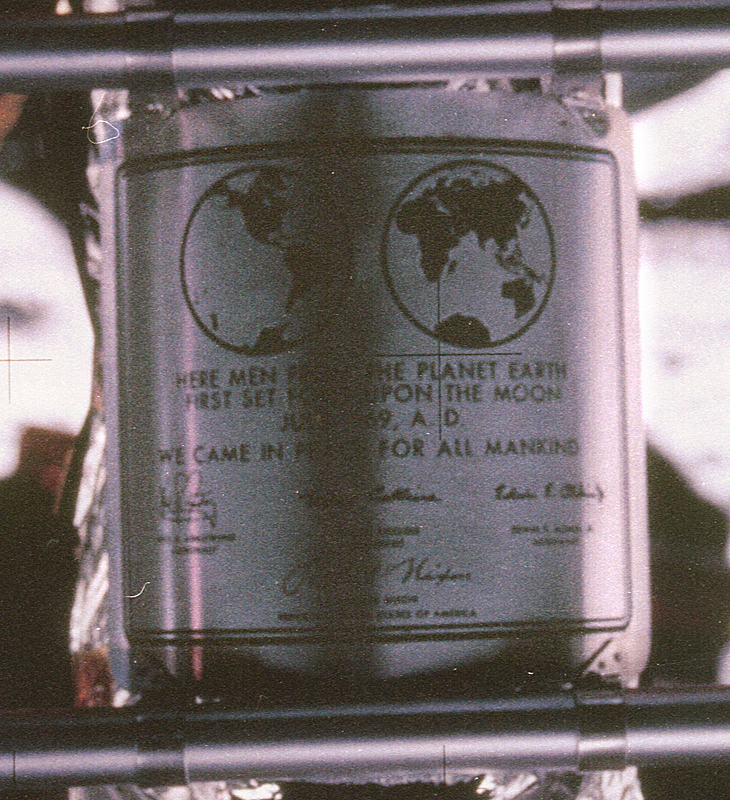
The astronauts removed a sheet of stainless steel to unveil the plaque affixed to the lunar module leg under the descent ladder and read to the television audience: "Here men from the planet Earth first set foot upon the Moon, July 1969 AD We came in peace for all mankind." Astronot mengeluarkan lembaran stainless steel untuk mengungkap plak menempel pada modul lunar kaki di bawah turun tangga dan membaca kepada penonton televisi: "Di sini orang-orang dari planet Bumi pertama yang menginjakkan kaki di Bulan, Juli 1969 Masehi Kami datang dalam damai bagi semua manusia. " It was signed by Armstrong, Collins, Aldrin, and President Richard Nixon. Itu ditandatangani oleh Armstrong, Collins, Aldrin, dan Presiden Richard Nixon.
(NASA photo ID AS11-40-5899) (NASA photo ID AS11-40-5899)
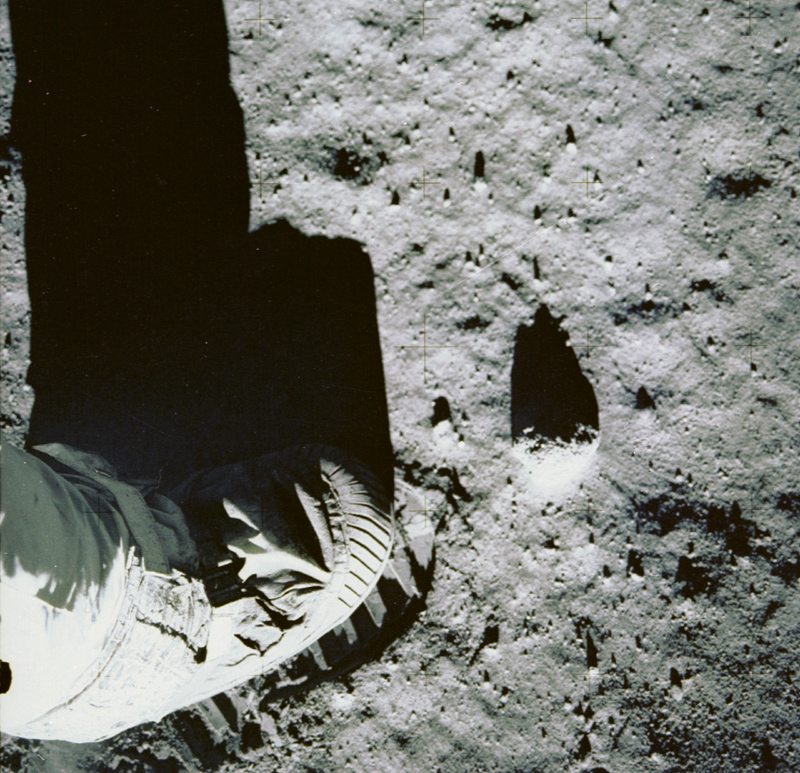
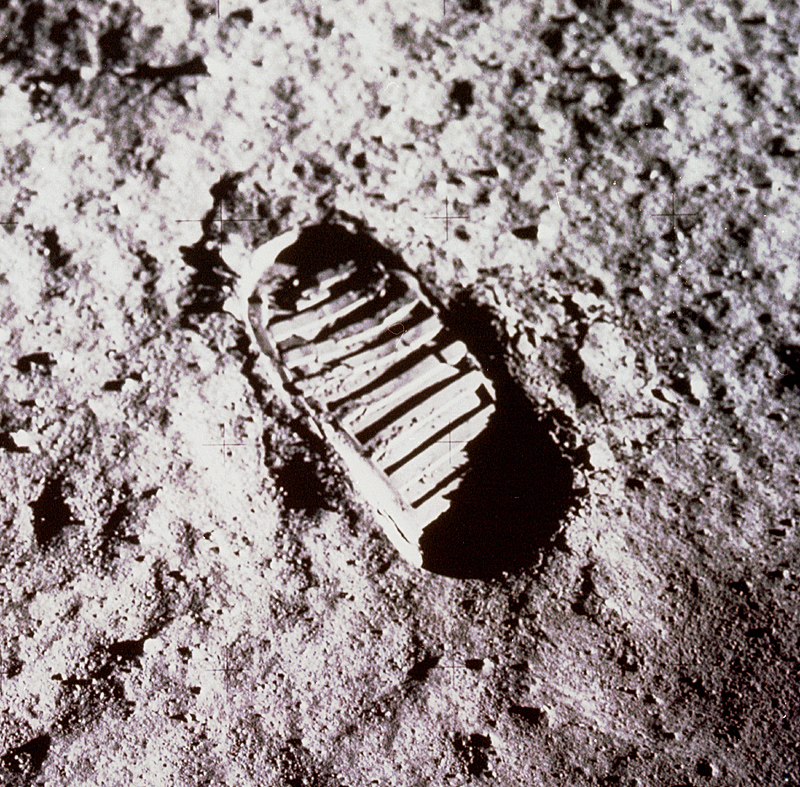
The footprints left by the astronauts in the Sea of Tranquility are more permanent than most solid structures on Earth. Jejak kaki yang ditinggalkan oleh para astronot di Laut Tranquility lebih permanen dari struktur yang paling padat di Bumi. Barring a chance meteorite impact, these impressions in the lunar soil will probably last for millions of years. Photographs of the footprints were actually part of a planned experiment by Aldrin to study the nature of the lunar dust and the effects of pressure on the surface. Pembatasan kesempatan dampak meteorit, tayangan tersebut di dalam tanah bulan mungkin akan berlangsung selama jutaan tahun. Foto-foto dari jejak kaki itu sebenarnya bagian dari percobaan yang direncanakan oleh Aldrin untuk mempelajari sifat lunar debu dan efek dari tekanan pada permukaan.
(NASA photo ID's AS11-40-5880 and AS11-40-5878) (NASA photo ID AS11-40-5880 dan AS11-40-5878)
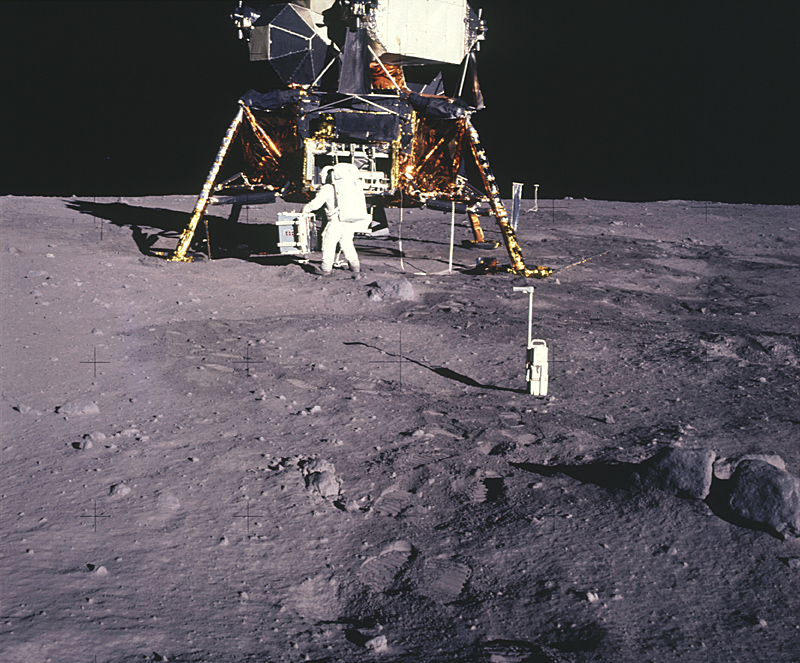
Here Aldrin is unloading the passive seismometer of the Early Apollo Scientific Experiments Package (EASEP) from the lunar module equipment bay. Berikut adalah bongkar muat Aldrin Seismometer pasif dari awal Ilmiah Percobaan Apollo Paket (EASEP) dari peralatan modul lunar teluk. The white apparatus in the foreground is the 35 mm stereo close-up camera. Aparat putih di latar depan adalah 35 mm stereo close-up kamera. Beyond the right leg is the solar wind experiment, and beyond that the lunar surface TV camera. Luar kaki kanan adalah angin matahari percobaan, dan lebih dari itu permukaan bulan kamera TV. The LM legs are wrapped in foil to provide thermal insulation. LM kaki dibungkus aluminium foil untuk menyediakan isolasi termal. There is a split rock in the lower right of the frame which is presumably ejecta from a nearby impact crater. Ada perpecahan batu di bagian kanan bawah frame yang diduga ejecta dari dampak dekat kawah.
(NASA photo ID AS11-40-5931) (NASA photo ID AS11-40-5931)

In the couple hours that Aldrin and Armstrong were on the Moon, there was little time to set up scientific experiments, but a small package (the EASEP, or Early Apollo Scientific Experiments Package) was deployed. Dalam beberapa jam yang Aldrin dan Armstrong berada di Bulan, ada sedikit waktu untuk menyiapkan percobaan ilmiah, tetapi paket kecil (yang EASEP, atau awal Ilmiah Percobaan Apollo Paket) telah dikerahkan. Aldrin is shown here setting up the Passive Seismic Experiments Package. Aldrin ditampilkan di sini adalah menyiapkan Seismic Passive Paket Percobaan. Behind Aldrin to the left is the Laser Ranging Retro-Reflector. Balik Aldrin ke kiri adalah Laser Ranging Retro-Reflector. The flag and the lunar surface television camera are left of the LM. Bendera dan permukaan bulan kamera televisi yang tersisa dari LM. This mission paved the way for the more extensive scientific studies done on later Apollo missions. Misi ini membuka jalan bagi studi ilmiah yang lebih luas dilakukan pada misi Apollo kemudian.
(NASA photo ID AS11-40-5949) (NASA photo ID AS11-40-5949)
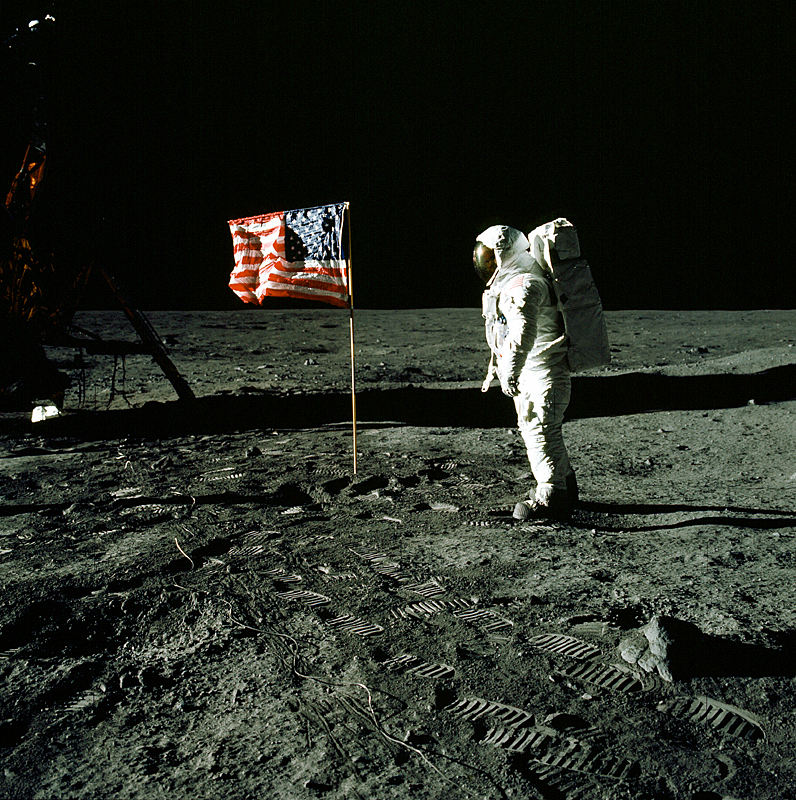
Aldrin posed for this picture next to the US flag. The rod to hold the flag out horizontally would not extend fully, so the flag ended up with a slight waviness, giving the appearance of being windblown. The flag itself was difficult to erect, it was very hard to penetrate beyond about 6 to 8 inches into the lunar soil. Aldrin berpose untuk foto ini di samping bendera Amerika Serikat. Batang untuk memegang bendera keluar horizontal tidak akan memperpanjang sepenuhnya, sehingga bendera berakhir dengan sedikit waviness, memberikan penampilan yang tertiup angin. Bendera itu sendiri sulit untuk tegak, itu sangat sulit untuk menembus melampaui 6 sampai 8 inci ke dalam tanah bulan.
(NASA Photo ID AS11-40-5875) (NASA Photo ID AS11-40-5875)
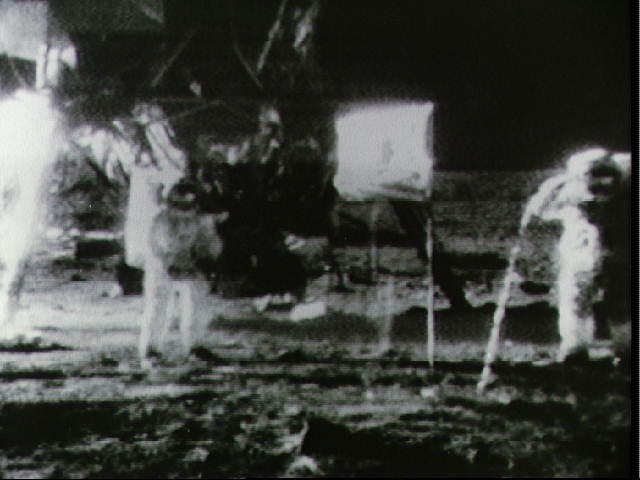
Millions of Earthlings watched the drama unfold on TV images taken by the black and white lunar surface camera. Jutaan Bumi menyaksikan drama di TV gambar yang diambil oleh hitam dan putih permukaan bulan kamera. Here, Armstrong is standing in the center, and Aldrin is saluting President Richard M. Nixon, who had just spoken to the two astronauts by radio telephone from the White House: "Hello, Neil and Buzz. I'm talking to you by telephone from the Oval Room at the White House, and this certainly has to be the most historic telephone call ever made ..... Because of what you have done, the heavens have become a part of man's world .......". Armstrong replied, "Thank you, Mr. President. It's a great honor and privilege for us to be here representing not only the United States but men of peace of all nations, and with interests and the curiosity and with the vision for the future." Di sini, Armstrong adalah berdiri di tengah, dan Aldrin adalah menghormat Presiden Richard M. Nixon, yang baru saja berbicara dengan dua astronot melalui radio telepon dari Gedung Putih: "Halo, Neil dan Buzz. Aku berbicara kepada Anda melalui telepon dari Ruang Oval di Gedung Putih, dan tentu ini harus menjadi panggilan telepon paling bersejarah yang pernah dibuat ..... Karena apa yang telah Anda lakukan, langit telah menjadi bagian dari dunia laki-laki ....... ". Armstrong menjawab," Terima kasih, Pak Presiden. It's a great kehormatan dan hak istimewa bagi kita untuk berada di sini bukan hanya mewakili Amerika Serikat, melainkan orang-orang yang damai dari segala bangsa, dan dengan minat dan rasa ingin tahu dan dengan visi untuk masa depan. "
(NASA photo ID S69-39562) (NASA photo ID S69-39562)

Walking on the lunar surface was not difficult, but took a little practice. Despite the fact that the backpacks and astronauts only weighed 1/6 on their 350 pound Earth weight, their center of gravity was shifted so they had to lean slightly forward to balance, and they still had to overcome the inertia of all that mass, so stopping usually took a few steps. Berjalan di atas permukaan bulan tidak sulit, tetapi mengambil sedikit latihan. Terlepas dari fakta bahwa ransel dan ditimbang astronot hanya 1 / 6 di atas Bumi £ 350 berat badan, pusat gravitasi mereka yang bergeser sehingga mereka harus bersandar sedikit ke depan untuk menyeimbangkan , dan mereka masih harus mengatasi inersia dari semua yang massa, jadi berhenti biasanya mengambil beberapa langkah. Here Aldrin is walking in the typical bent posture near the leg of the lunar module. Footprints are clearly visible in the foreground. Sini Aldrin berjalan dalam postur membungkuk khas dekat kaki lunar module. Footprints secara jelas terlihat di latar depan.
(NASA photo ID AS11-40-5902) (NASA photo ID AS11-40-5902)
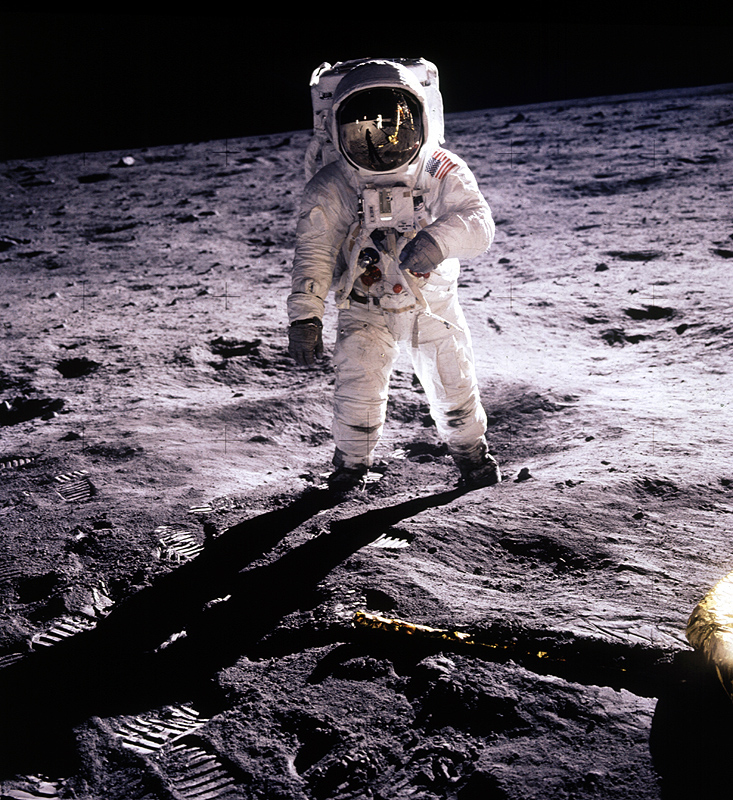
Neil Armstrong took this picture of Edwin Aldrin, showing a reflection in Aldrin's visor of Armstrong and the Lunar Module. Neil Armstrong mengambil foto ini Edwin Aldrin, menunjukkan refleksi dalam Aldrin's pelindung dari Armstrong dan Lunar Module. This is one of the few photographs showing Armstrong (who carried the camera most of the time) on the Moon. The tasks assigned to both astronauts were carefully choreographed and practiced back on Earth, and Aldrin was busy setting up scientific experiments among other responsibilities. Ini adalah salah satu dari beberapa foto yang menunjukkan Armstrong (yang membawa kamera hampir sepanjang waktu) di Bulan. Tugas-tugas yang diberikan kepada kedua astronot dengan hati-hati koreografer dan dipraktekkan kembali di Bumi, dan Aldrin sedang sibuk menyiapkan percobaan ilmiah antara lain tanggung jawab. Apparently taking pictures was not as carefully planned. Aldrin later said, "My fault, perhaps, but we had never simulated this in training." Rupanya pengambilan gambar tidak seperti yang direncanakan dengan hati-hati. Aldrin kemudian berkata, "Salahku, mungkin, tapi kami belum pernah simulasi dalam pelatihan ini."
(NASA photo ID AS11-40-5903) (NASA photo ID AS11-40-5903)
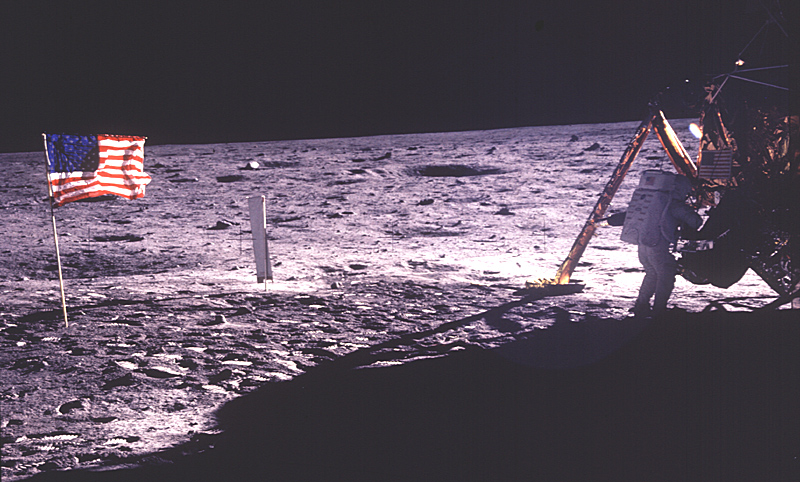
Armstrong was photographed here at the Modular Equipment Stowage Assembly (MESA) on the lunar module, packing the bulk rock and soil sample he had collected. Armstrong difoto di sini, di tempat penyimpanan Equipment Modular Assembly (MESA) pada modul lunar, kemasan sebagian besar sampel batu dan tanah yang telah dikumpulkannya. Aldrin took this picture as part of a series of panoramas of the area around the Tranquility Base landing site. Aldrin mengambil foto ini sebagai bagian dari serangkaian panorama dari daerah sekitar lokasi pendaratan Tranquility Base. Armstrong is in the shadow of the lunar module, details can only be seen with processing, making the sunlit surface directly behind the LM appear very bright. Armstrong adalah dalam bayangan lunar modul, rincian hanya dapat dilihat dengan pemrosesan, membuat permukaan yang diterangi matahari tepat di belakang LM tampak sangat cerah.
(NASA photo ID AS11-40-5886) (NASA photo ID AS11-40-5886)
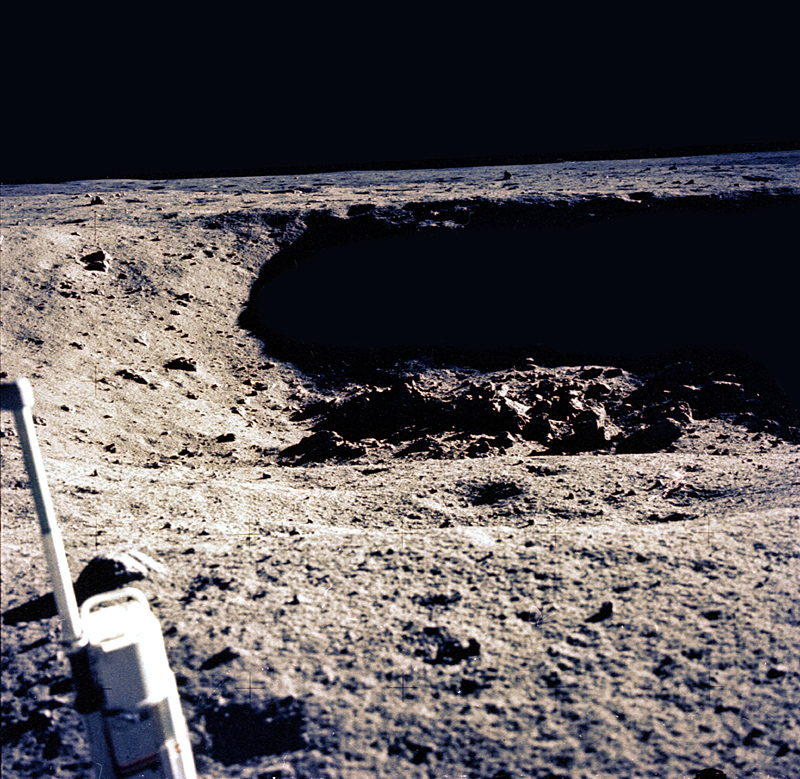
At one point Armstrong disappeared from the TV camera for about 3 minutes to photograph East Crater about 60 meters away from the LM. Pada satu titik Armstrong menghilang dari kamera TV selama sekitar 3 menit untuk memotret kawah Timur sekitar 60 meter jauhnya dari LM. He estimated the crater was about 70 or 80 feet in diameter and 15 or 20 feet deep. Dia memperkirakan kawah ini sekitar 70 atau 80 meter dengan diameter dan 15 atau 20 kaki dalamnya. The crater wall in the background is in deep shadow. Dinding kawah di latar belakang adalah di dalam bayangan. The object at lower left is the stereo close-up camera. Objek di kiri bawah adalah stereo close-up kamera.
(NASA photo ID AS11-40-5954) (NASA photo ID AS11-40-5954)

The astronauts returned to the Lunar Module after 2 hours and 32 minutes on the surface and took this picture. The footprints of the astronauts and the lunar surface television camera can be seen. Para astronot kembali ke Lunar Module setelah 2 jam dan 32 menit di permukaan dan mengambil gambar ini. Jejak kaki para astronot dan permukaan bulan kamera televisi dapat dilihat. The flag was actually knocked over when by the LM's exhaust when the astronauts took off from the Moon at 1:54 pm EDT on July 21. Bendera sebenarnya mengetuk berakhir ketika oleh LM knalpot ketika para astronot lepas landas dari Bulan at 1:54 EDT pada 21 Juli.
(NASA photo ID AS11-37-5545) (NASA photo ID AS11-37-5545)
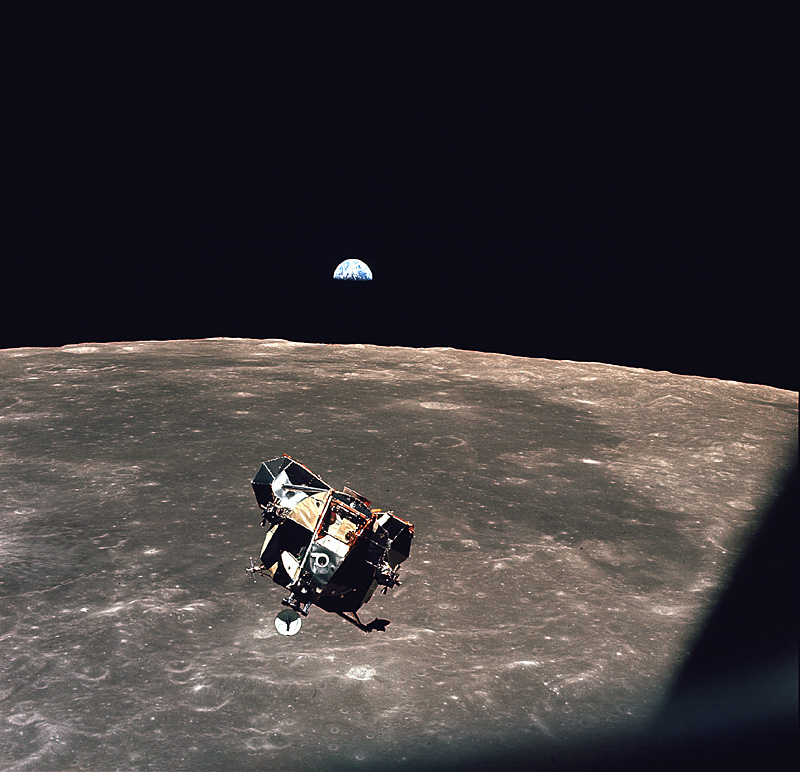
After lifting off from the lunar surface, the lunar module made its rendezvous with the command module. Setelah lepas landas dari permukaan bulan, lunar modul yang dibuat dalam pertemuan dengan perintah modul. The Eagle docked with Columbia, and the lunar samples were brought aboard. Eagle berlabuh dengan Columbia, dan sampel lunar dibawa naik. The LM was left behind in lunar orbit while the three astronauts returned in the command module to the blue planet in the background. LM ditinggal di lunar orbit sementara tiga astronot kembali pada modul perintah ke planet biru di latar belakang.
(NASA photo ID AS11-44-6642) (NASA photo ID AS11-44-6642)
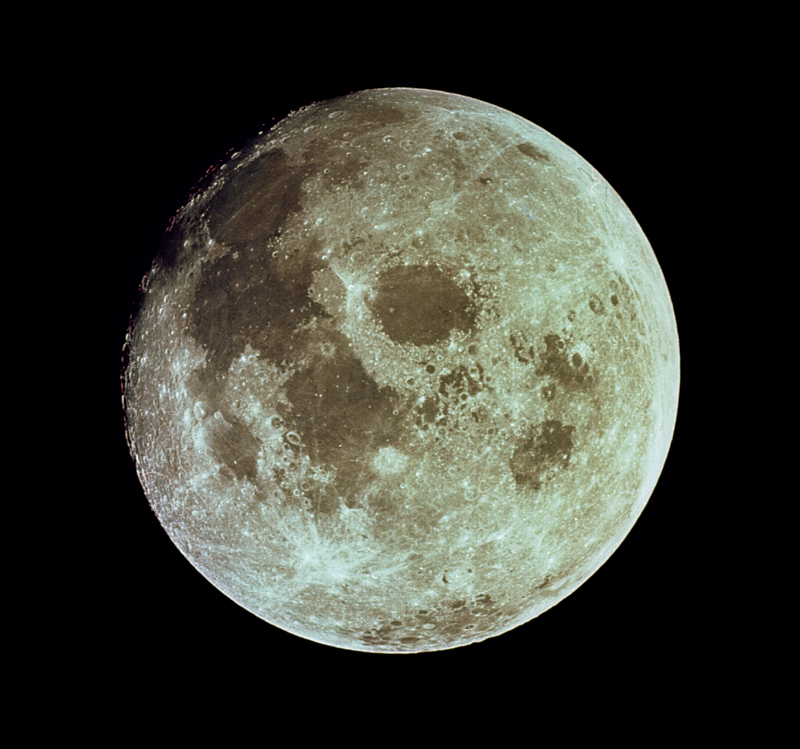
View of a full Moon photographed from the Apollo 11 spacecraft during its transearth journey homeward. Tampilan Bulan penuh difoto dari Apollo 11 kendaraan angkasa transearth selama perjalanan pulang. When this picture was taken the spacecraft was about 10,000 nautical miles from the Moon, after a successful burn of the command/service module main engine to leave lunar orbit. Ketika foto ini diambil pesawat ruang angkasa itu sekitar 10.000 mil laut dari Bulan, setelah berhasil membakar dari perintah / modul layanan mesin utama untuk meninggalkan orbit lunar. After a two and a half day coast the astronauts would re-enter Earth's atmosphere. Setelah dua setengah hari pantai astronot akan kembali memasuki atmosfir bumi.
(NASA photo ID AS11-44-6667) (NASA photo ID AS11-44-6667)
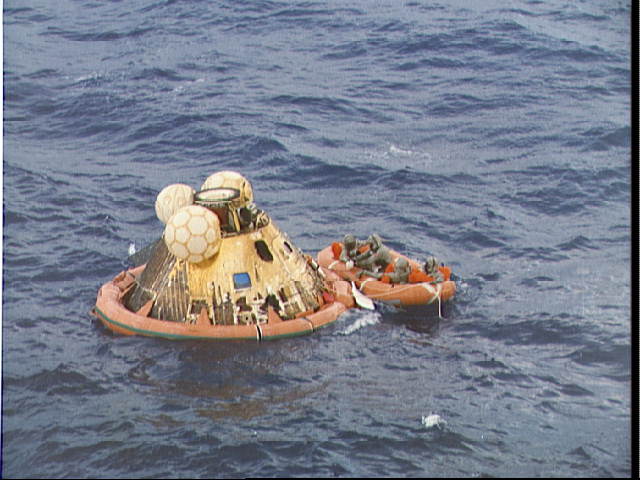 The final phase of Kennedy's challenge was completed at 12:50 pm EDT on July 24, 1969, when the Columbia splashed down about 812 nautical miles southwest of Hawaii, returning the 3 astronauts safely to Earth. Tahap terakhir tantangan Kennedy selesai at 12:50 EDT pada 24 Juli 1969, ketika Columbia memercik ke bawah sekitar 812 mil barat daya Hawaii, 3 astronot kembali ke Bumi dengan aman. Here they are shown in a life raft with a Navy frogman. All four men are wearing biological isolation garments, awaiting helicopter pickup and transport to the USS Hornet. Di sini mereka akan ditampilkan dalam rakit kehidupan dengan Angkatan Laut manusia katak. Semua empat orang yang mengenakan pakaian isolasi biologis, menunggu helikopter pickup dan transportasi ke USS Tawon. They stayed in quarantine for three weeks. The day before splashdown, Aldrin said, "We feel this stands as a symbol of the insatiable curiousity of all mankind to explore the unknown." Mereka tinggal di karantina selama tiga minggu. Sehari sebelum penceburan, Aldrin mengatakan, "Kami merasa ini berdiri sebagai simbol tak terpuaskan curiousity dari seluruh umat manusia untuk menjelajahi yang tidak diketahui." It also stands as a tribute to the thousands of engineers, scientists, and others who made the journey possible with their extraordinary efforts. Ini juga berdiri sebagai penghormatan kepada ribuan insinyur, ilmuwan, dan lain-lain yang membuat perjalanan dapat dilakukan dengan upaya mereka yang luar biasa.
(NASA photo ID S69-21698) (NASA photo ID S69-21698)

